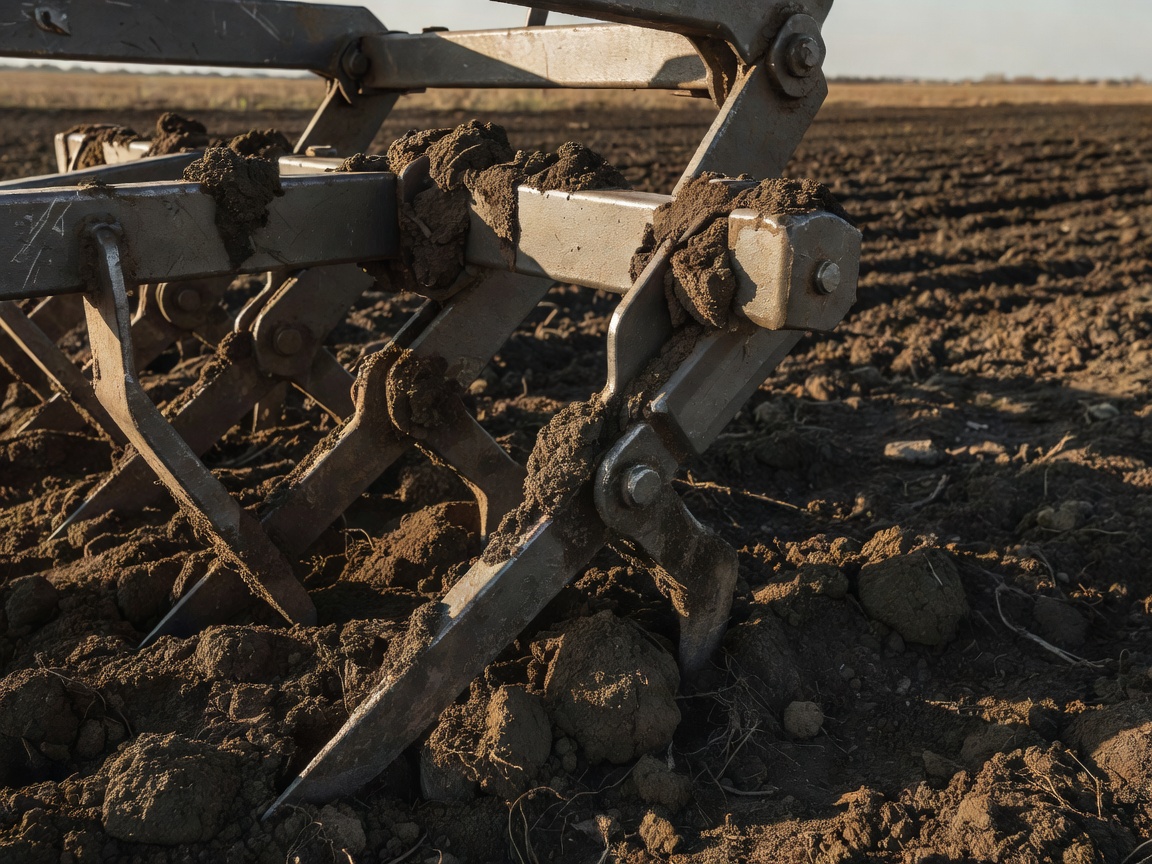
Begin with the implement type.
Disc tools, tines, drills, planters, cutting equipment and trailers do not present the same cleaning problem. Working edges, frames, rollers, guards and adjustment points create different pockets for soil and crop material. Identify the implement, its recent task and the next movement before selecting a method.
Residue can change weight, obscure wear and affect transport preparation. It may also dry into hard layers that are difficult to identify from a distance. The objective is controlled removal and clear observation, not indiscriminate force.
Complex geometry needs an access plan.
Frames, folded sections, narrow gaps and protected mechanisms can be difficult to reach. Do not place hands or tools near moving mechanisms. Cleaning should occur only with the equipment safely stopped, isolated and supported in accordance with manufacturer instructions and site procedures. Never work beneath unsupported equipment.
Where access is elevated or restricted, use suitable equipment and qualified personnel. A difficult-to-reach location is a planning issue, not a reason to take an improvised shortcut.
Material differences matter.
Painted steel, bare steel, galvanised sections, plastics, rubber, glazing and decals may require different care. Existing corrosion, damaged coatings and worn labels should be recorded. Cleaning products and equipment must be compatible with the surface and the manufacturer’s guidance. Avoid unsafe chemical handling and do not assume that a stronger method is better.
Inspection after cleaning.
Once material is removed, inspect working edges, joints, guards, fasteners, hydraulic lines and connection points visually where safe. Cleaning can reveal damage; it does not diagnose or repair it. Record observations for the responsible maintenance process. If the implement is being moved, confirm that transport arrangements, dimensions and securing requirements are handled by competent personnel.
Storage and transport preparation.
Implement cleaning may be followed by drying, protection and a storage decision. Consider exposure, standing water, cover arrangements and access for the next use. Follow the machine manual for lubrication, folding, support and storage requirements. Cleaning alone is not a storage approval.
What to check
- Implement category, recent work and residue type.
- Safe shutdown, isolation, support and access.
- Working edges, frames, guards and narrow gaps.
- Paint, galvanised areas, plastics, rubber and decals.
- Connection points, lines and transport condition.
- Drying, records and manufacturer storage guidance.
Advantages and limitations
Good cleaning improves visibility and supports transport or storage planning. It cannot replace a structural, hydraulic, electrical or mechanical inspection.