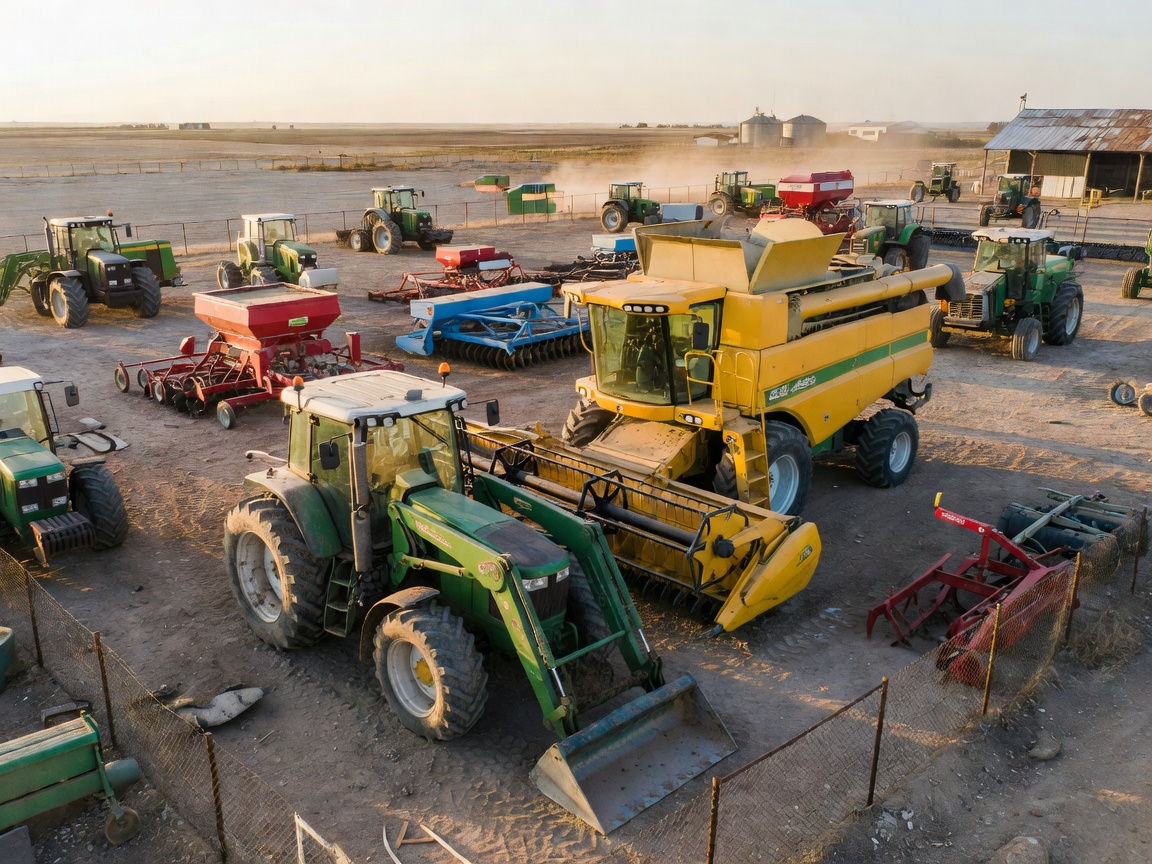
Workload changes the cleaning requirement.
Tractors move between fields, roads, implements and storage. Combines and harvesters often accumulate concentrated residue during a short, intense operating period. Cleaning plans should therefore follow the crop, weather, hours worked and next use. A brief between-operation clean may focus on visibility and access. A post-season clean can require a broader condition record.
External panels and lower access.
Lower panels, wheel areas, steps and implement connection points commonly collect soil. Crop residue may sit around guards, housings and cooling-air routes. Panels should be approached according to the manufacturer’s guidance and the condition of seals, decals and finishes. Do not force access or remove protective parts unless the responsible procedure allows it.
Large machinery creates height and reach hazards. Never climb onto unstable surfaces or clean around moving equipment. Use planned access equipment and qualified personnel where access cannot be made safely from ground level.
Cabins, visibility and operator contact points.
Operator compartments need careful handling. Glazing, mirrors, steps, handles, pedals and control surfaces affect visibility and daily use. Dust can remain on ledges and ventilation routes. Interior cleaning should respect electrical controls, displays and manufacturer instructions. Exposed electrical systems must not be treated casually; isolate and protect according to the relevant procedure.
Between operating periods.
When a tractor or harvester moves from one crop or task to another, residue can be a practical contamination issue as well as a visibility issue. The intended interval matters. A short pause may call for targeted removal. A longer pause allows time for drying, observation and documentation. The correct approach depends on the machine and worksite.
After cleaning.
Check glazing, lights, steps, handholds, guards and obvious access points. Look for trapped residue and areas where cleaning has revealed damage or leaks. Cleaning does not prove mechanical condition. Escalate findings to qualified personnel and follow the machinery manual before return to service or storage.
What to check
- Operating period, crop residue and next planned task.
- Safe shutdown, isolation and approved access.
- Cabin glazing, mirrors, steps and controls.
- Cooling-air routes, guards, wheels and lower panels.
- Electrical components and sensitive surfaces.
- Drying time, observations and storage status.
Advantages and limitations
A structured clean supports visibility and handover between operating periods. It cannot replace maintenance, electrical work, mechanical inspection or manufacturer-specific storage instructions.