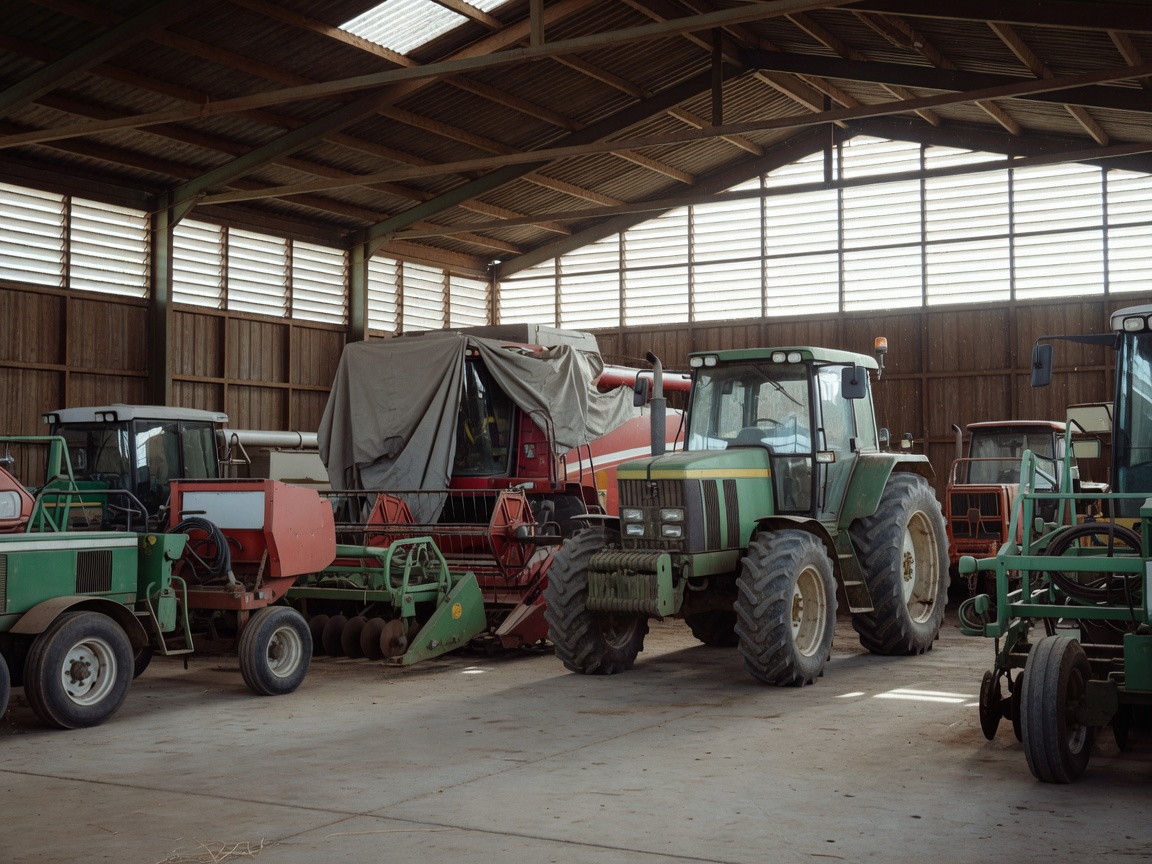
Clean before the machine disappears from view.
Pre-storage cleaning should reflect what the machine has done and how long it will stand. Soil, dust and crop residue can hide damage or retain moisture. Identify the equipment, its last task, storage location and expected return period before work begins.
Manufacturer storage procedures remain the controlling reference. General cleaning guidance does not replace instructions for lubrication, fuel systems, batteries, hydraulics, tyres, covers, supports or protection products.
Drying is an environmental decision.
A clean surface is not necessarily a dry surface. Weather, ventilation, temperature, shade, enclosed spaces and trapped geometry all affect drying. Plan time for moisture to leave steps, recesses, guards and lower sections. Do not seal damp equipment beneath a cover or move it into a storage area without considering the storage environment.
Document condition observations.
Record the machine identity, date, operating context and visible observations. Useful notes may include residue locations, coating condition, corrosion, damaged panels, missing labels, glazing condition and access limitations. Photographs can support a record when captured safely and stored appropriately. A condition note is not a repair diagnosis.
Storage environment and access.
Consider roof condition, airflow, ground surface, drainage, lighting, security and access for inspection. Equipment should not block emergency routes or create avoidable movement hazards. Covers may protect surfaces but can also retain moisture if poorly selected or fitted. Follow manufacturer guidance and site requirements.
Return-to-service preparation.
Before the next operating period, review the record and follow the relevant manual. Confirm that required inspections, servicing, cleaning and safety checks have been assigned. Cleaning may reveal an issue; it does not authorise operation. Mechanical, hydraulic, electrical and structural concerns require the correct qualified process.
What to check
- Machine identity, last task and planned storage duration.
- Manufacturer-specific storage instructions.
- Residue, moisture, corrosion and surface observations.
- Ventilation, ground, cover and access conditions.
- Condition photographs and responsible follow-up.
- Return-to-service inspection and readiness record.
Advantages and limitations
Documented preparation reduces ambiguity at the next handover. It does not guarantee condition, prevent deterioration in every environment or replace service and repair procedures.