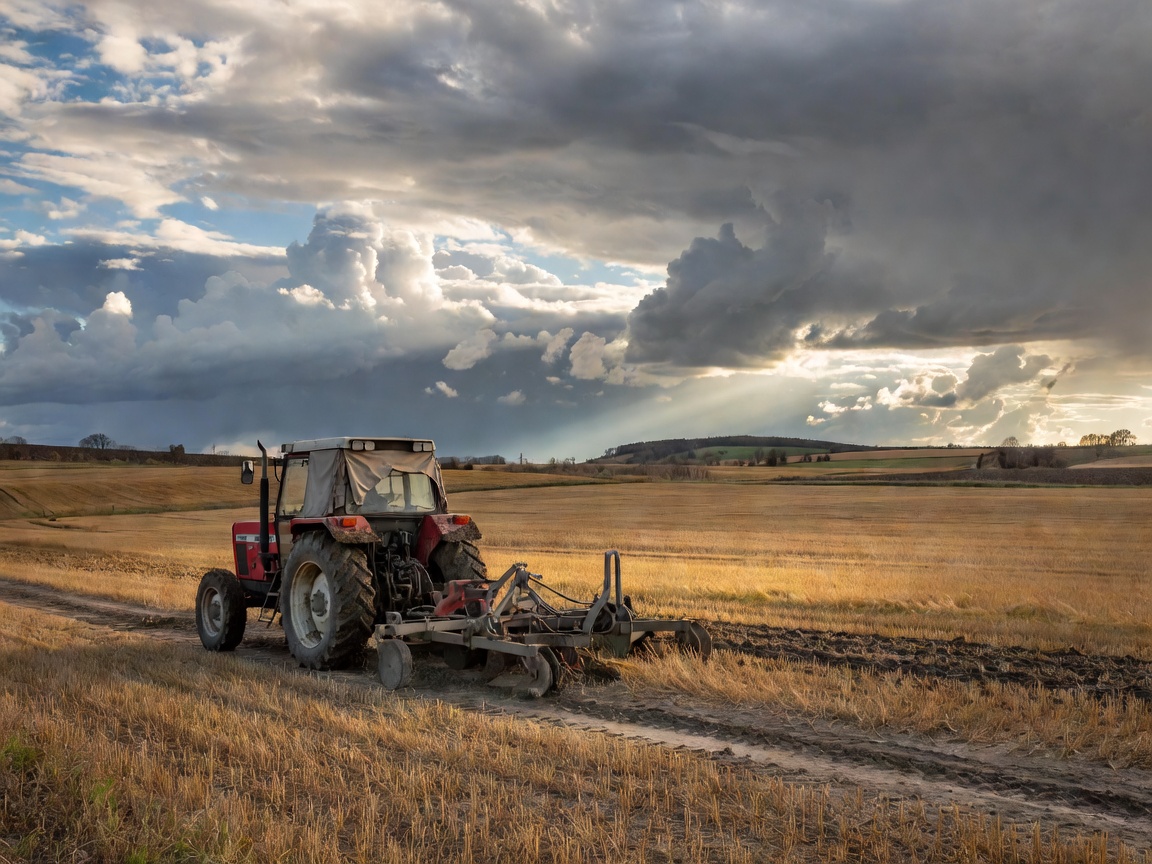
Spring: prepare before demand rises.
Spring preparation often combines stored equipment review with the first active field work. Clean visible storage residue, review previous condition notes and confirm that access, glazing, steps and working areas are suitable for inspection. Follow the manufacturer’s return-to-service requirements before operation.
Weather can change quickly. Mud, standing water and limited drying time should influence the work sequence. Prioritise equipment with an early task and avoid treating a general seasonal plan as a substitute for machine-specific instructions.
Summer: manage repeated use.
During busy operating periods, short cleaning cycles may be more practical than one delayed intervention. Focus on visibility, access, crop material and areas where residue affects the next task. Workload changes across farms and regions, so schedule by contamination and use rather than a universal interval.
Autumn: control harvest residue.
Harvest periods can place large amounts of dry crop material around combines, trailers, headers and support equipment. Plan cleaning after safe shutdown and isolation. Consider fire risk, enclosed spaces, guards, access and the condition of materials. Never work around moving machinery or defeat safety devices. Escalate specialist access and inspection to qualified personnel.
Winter: protect the storage handover.
Winter preparation is about moisture awareness, exposure, access and records. Clean before storage, allow appropriate drying and follow the manual for protection, covers, supports and service actions. Storage buildings need suitable ventilation, ground conditions and safe access. A cover can protect equipment, but it can also retain moisture if unsuitable.
Keep records useful.
A seasonal record should identify the equipment, date, operating period, contamination, observations and assigned follow-up. Use clear language. “Residue around guard” is more useful than “machine checked”. Cleaning and inspection are related but separate activities.
What to check
- Upcoming workload and equipment priority.
- Weather, drying time and site access.
- Crop residue, dust, mud and exposure.
- Shutdown, isolation and safe access requirements.
- Storage environment and cover decisions.
- Record ownership and return-to-service actions.
Advantages and limitations
Seasonal planning reduces rushed handovers and makes responsibilities clearer. It cannot predict every site condition or replace manufacturer procedures, workplace risk assessment, maintenance or repair.